
How Beam Trolleys and Retractable Spring Balancers Boost Industrial Work
In a busy factory, workers often handle heavy tools, welding guns, and other equipment throughout their shifts. Moving these tools into position, holding them during work, and putting them back after use can take more effort than expected. When tools are heavy or used repeatedly, this can also lead to operator fatigue and an untidy workstation.
However, the right material-handling equipment can make these tasks easier. A beam trolley allows halted machinery to move with an overhead beam, while a retractable spring balancer keeps a tool supported and within easy reach. Pairing a beam trolley with a retractable spring balancer creates a dynamic, ergonomic workstation that removes tool weight while enabling effortless movement throughout the workspace.
Understanding the Core Equipment
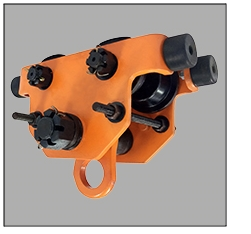
- Beam Trolley: It is a wheeled carriage that attaches to the bottom edge of an overhead beam so tools or equipment can slide smoothly sideways from one spot to another. Whether a worker pushes it by hand, pulls a chain, or runs it with a motor, it lets halted gear move easily across the work area.
- Retractable Spring Balancer: A mechanical suspension unit housing a coiled spring and drum that counterbalances the weight of a hanging tool. By matching the tool’s weight, it creates a near-weightless feel holding the tool steady at working height and drawing it back up when released.
How Do Both Products Work Together?
A beam trolley and a retractable spring balancer serve different purposes, but they can complement each other in industrial workstations.
- The spring balancer supports the tool’s weight and enables vertical movement within its range. On the other hand, the trolley provides smooth horizontal mobility along the overhead beam.
- Consider a welding station where an operator needs to use a welding gun at different positions. The balancer keeps the gun balanced and reduces the effort required to hold it. The trolley lets the entire arrangement travel along the overhead beam as the operator moves between work areas.
- This combination can be particularly useful in automobile plants, fabrication workshops, and production lines where tools are used repeatedly. Additionally, it clears workspace clutter and prevents machinery from obstructing walkways.
- To ensure optimal safety and performance, choose both devices to match load requirements and fit them to appropriate support structures. Routine checks of the trolley, rollers, wire rope, and balancing mechanism are also essential.
Tips for Safe Operation
Choosing and maintaining the right suspension hardware helps keep both workers and equipment protected during daily shifts:
- Match Load and Structure Ratings: Select a retractable spring balancer whose adjustment range matches the combined weight of the tool and accessories, and ensure the beam trolley fits securely on a properly rated overhead beam.
- Perform Routine Inspections: Regularly check trolley wheels and rollers, wire rope or cable condition, spring tension adjustments, and safety locking features so performance remains consistent over time.
Conclusion
Integrating a retractable spring balancer with a beam trolley streamlines demanding equipment handling, delivering a safer, more efficient, and ergonomic workflow throughout industrial work. Operators enjoy smooth horizontal movement along the track and reliable vertical support directly at their workstation, removing the need to constantly moving heavy loads or navigate crowded work surfaces and hoses. Selecting rated equipment, verifying beam fit, and performing regular safety inspections help protect both workers and valuable tools. If a team needs reliable overhead tool support, they can check out Spring Balancers for a retractable spring balancer lineup built for everyday work and safer shop floors.