
The Hidden Role of Mat Grip in Judo Training
Good judo often starts before the hands take hold. It starts with the feet. A player steps in, turns, shifts weight, and tries to break balance in less than a second. If the surface underfoot feels wrong, the whole movement changes. The throw may lose power. The landing may become awkward. Even simple footwork can feel uncertain.
This is why mat grip deserves more attention than it usually gets. Many people think first about softness, thickness, or impact protection. Those things matter, of course. But grip affects how players move before the throw happens. It supports balance, control, and timing. In a sport built around small changes in pressure, the surface can quietly influence every session.
Judo mats need to give enough hold for quick movement without locking the feet in place. That balance doesn’t always easy. If the surface is too slippery, players may hesitate when stepping in for throws. They may shorten their movement or avoid certain entries because they cannot trust their footing. This can slow learning and make training feel less natural.
A surface with too much grip can create a different problem. Judo requires turning, pivoting, and changing direction. If the foot sticks too hard, the knee or ankle may take extra strain. This is especially important during repeated drills, where the same movement happens again and again. The mat should allow movement, not fight against it.
Grip also changes how safe falling practice feels. Beginners often focus on how soft the landing is, but the setup before the fall matters too. If a player slips during entry, the fall may happen earlier than expected. If the foot cannot rotate, the body may twist in the wrong way. Clean foot movement helps both the thrower and the person being thrown stay more controlled.
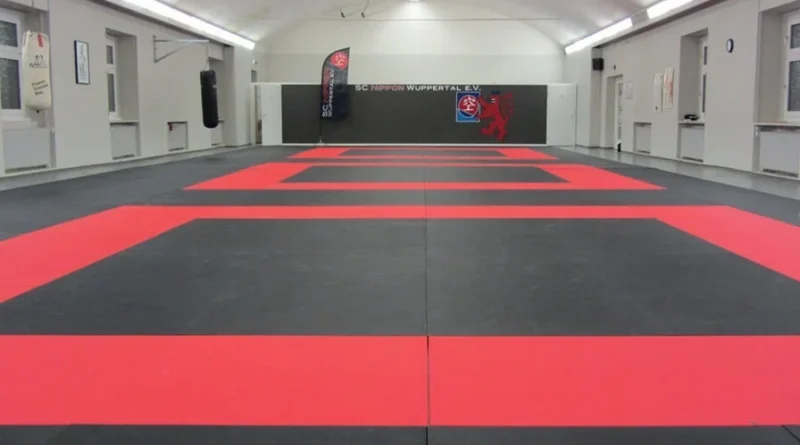
For clubs and schools, consistency is another key point. The training area should feel even from one section to another. If one part grips and another feels slick, players may adjust without realising it. They might become cautious in one corner and more confident in another. Over time, uneven surfaces can disturb the rhythm of training. This matters in busy sessions where players move across the whole mat area.
Cleaning can affect grip too. Sweat, dust, chalk, and dirt can change the feel of the surface. A mat that performed well when new may become less reliable if it is not cleaned properly. At the same time, harsh cleaning products can damage the top layer or leave a residue. A simple cleaning routine, using suitable products, helps protect hygiene and performance.
The base underneath the mats also plays a role. Even a good surface can feel poor if the floor below is uneven or unstable. Gaps between sections can affect footwork. Edges that lift can create distractions or trip risks. This is why installation and regular checks matter. The best training surface is not just about the top layer. It is about how the whole area works together.
Coaches may also notice how grip affects confidence. When players trust the floor, they attack more naturally. They commit to entries, adjust their balance, and practise with better rhythm. When the floor feels uncertain, movement becomes smaller. Learners may blame themselves, but the surface may be part of the issue.
Choosing Judo mats should therefore involve more than asking whether they are thick enough. Clubs should think about the type of training, the age and skill level of users, the cleaning routine, and how often the area will be used. A beginner class, a school club, and a serious training centre may all need slightly different priorities.
Grip is not the loudest feature in a training room. It does not stand out like colour, size, or thickness. Yet it sits under every step, turn, throw, and fall. Well-chosen Judo mats help players move with trust, land with better control, and build skills on a surface that supports the sport instead of working against it.